
Posted On July 10, 2026
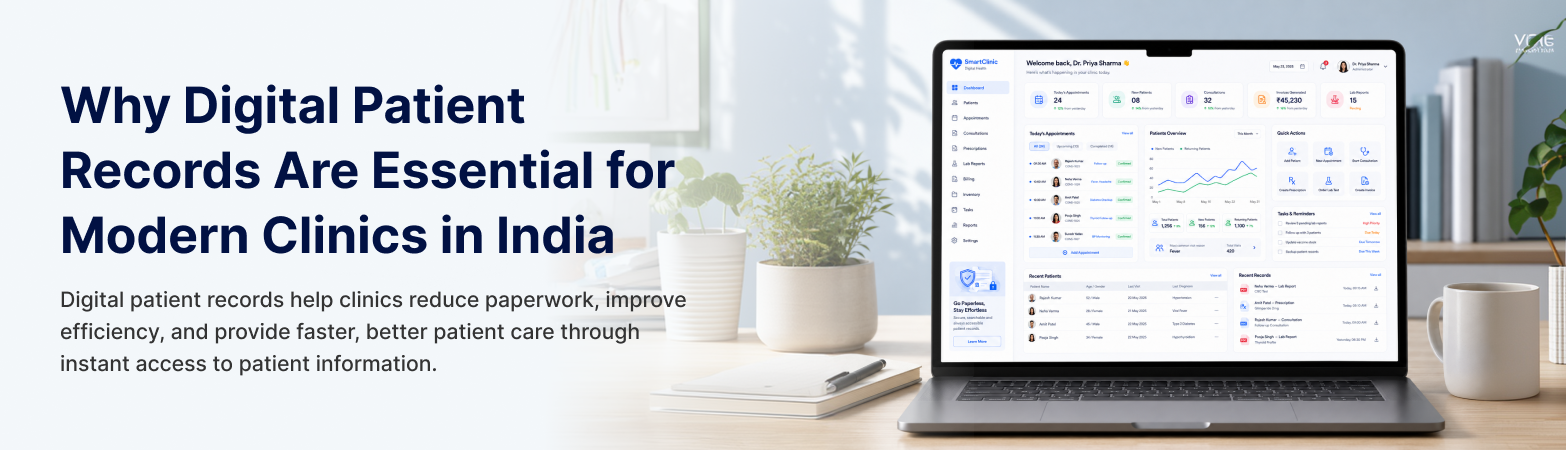
For many clinics, moving from paper files to Digital Patient Records isn’t about keeping up with technology. It’s about running a smoother practice. When patient information is easier to access, appointments move faster, follow-ups become simpler and doctors spend less time searching for files.
As India’s digital health ecosystem continues to evolve, Digital Patient Records are becoming less of a competitive advantage and more of an everyday expectation.
Most clinics don’t wake up one morning and decide to go digital.
Usually, something forces the conversation.
Maybe patient files are becoming difficult to manage.
Maybe doctors are spending too much time looking for old prescriptions.
Maybe reception staff are entering the same information over and over again.
Paper works—until it doesn’t.
As patient numbers grow, so does the time spent managing records instead of caring for patients.
That’s often the moment clinics realise the problem isn’t paperwork.
It’s the workflow built around it.
People often think Digital Patient Records simply replace paper folders.
In reality, they change how a clinic functions.
A doctor can review a patient’s consultation history before they walk into the room.
A receptionist can update contact details once instead of writing them across multiple registers.
Follow-up visits become easier because previous prescriptions, investigations and notes are already available.
The technology doesn’t improve care on its own.
It removes small delays that happen dozens of times every day.
Those small improvements quickly add up.
Healthcare in India is becoming increasingly connected.
Initiatives under the Ayushman Bharat Digital Mission (ABDM) are encouraging healthcare providers to adopt digital records that can securely integrate with the country’s broader digital health ecosystem through patient consent. Clinics that digitise today are often better prepared for future interoperability requirements and evolving patient expectations.
Patients are changing too.
Many now expect digital prescriptions.
They expect shorter registration times.
They expect their healthcare providers to have access to previous medical information without starting from scratch every visit.
Digital Patient Records make those experiences possible.
One mistake clinics often make is comparing software based only on features.
The better question is much simpler.
Those practical questions usually tell you more than a long product demonstration.
Technology should fit around the clinic—not force the clinic to change everything it already does well.
Digital Patient Records aren’t replacing good healthcare.
They’re removing unnecessary friction from it.
The less time a clinic spends managing paperwork, the more time it has for patients.
That’s ultimately what good healthcare technology should achieve.
At smartPerfect.ai, we help clinics modernise patient record management with secure, easy-to-use healthcare software built around real clinical workflows. Whether you’re moving away from paper records or looking to build a more connected digital practice, we design solutions that support your team today while preparing your clinic for tomorrow.
Digital Patient Records are electronic versions of a patient’s medical history, including consultations, prescriptions, diagnoses, laboratory reports and treatment notes. They replace paper files and make patient information easier to access.
Digital records reduce paperwork, improve access to patient information, support better organisation and help clinics run more efficiently while improving the overall patient experience.
Yes. As India’s digital health ecosystem continues to evolve through initiatives such as ABDM, Digital Patient Records are becoming increasingly important for interoperability, operational efficiency and future-ready healthcare delivery.
Absolutely. Many modern clinic management platforms are designed specifically for small and medium-sized practices, making it easier to manage patient information without investing in large hospital systems.
Doctors can quickly access patient histories, previous prescriptions and consultation notes, reducing administrative work and allowing them to spend more time focusing on patient care.
“`